Industry Basics
Labor & the Workforce: Keeping Pallets Moving Starts with People
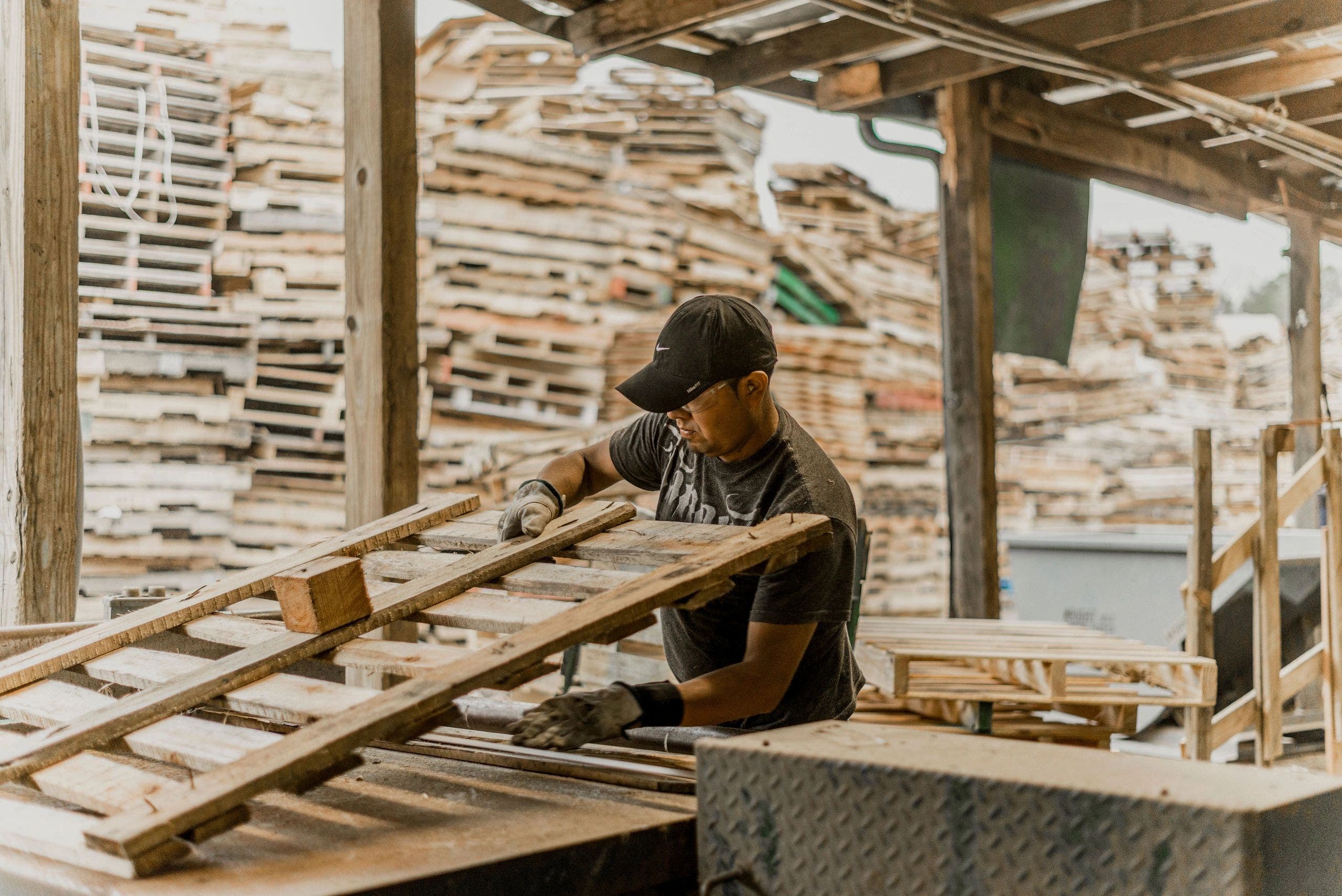
At J.C. Pallet Company, we've always believed the strongest part of our operation isn't a board or a nail—it's the people behind every repair, sort, build, and delivery. We started as a family-run business focused on repairing and selling recycled pallets and expanding into reclaimed lumber, woodchips, and mulch, and that "people-first" foundation is still core to who we are today.
That's why a recent industry workforce study from the National Wooden Pallet & Container Association (NWPCA) and The Manufacturing Institute (MI) stood out to us. In their July 2023 executive summary, authors Chad Moutray and Anjana Radhakrishnan detail the same reality we see across the pallet world: the biggest challenges aren't only operational—they're workforce-related.
Why the industry is talking about labor—right now
The NWPCA/MI study emphasizes that the wooden pallet and container industry serves as a backbone for storing, transporting, and shipping goods—and it's bigger than many people realize. The executive summary notes "more than 1.8 billion wooden pallets" are used daily in the U.S., and the industry contributes $10.7 billion to the American economy.
But even essential industries feel strain when hiring gets harder. The study—based on an online survey and in-depth interviews conducted March to May 2023—identifies the two top pain points as recruitment and retention, citing a historically tight labor market and the strenuous nature of many entry-level roles.
The two biggest hurdles: getting applicants—and keeping great people
One data point from the executive summary is especially telling: roughly 67% of surveyed companies said their greatest recruitment challenge is simply getting applicants in the door.
On the retention side, the study reports that 65% of companies cited "better compensation elsewhere" as a reason employees quit, while 56.7% pointed to "strenuous work" as another top reason.
These numbers matter because pallet work is hands-on and time sensitive. When teams run short, the impact ripples: production slows, repairs back up, and service levels become harder to maintain. That's exactly why workforce conversations aren't just "HR topics"—they're business continuity topics.
What companies are doing about it (and what we're learning)
One of the most valuable parts of the executive summary is that it doesn't stop at problems—it highlights solutions being tested across NWPCA member companies.
1) Expanding talent pools
The report notes multiple companies recruiting from incarcerated and second-chance populations, and it also highlights partnerships with veterans' organizations and collaborations that support hiring workers with disabilities.
From our perspective, this is an important reminder: if the same hiring channels aren't producing applicants, the answer isn't to post the same job again—it's to widen the doorway thoughtfully and responsibly.
2) Training and career development
The executive summary reports that nearly 30% of respondents are creating or expanding internal training programs, and 11% are collaborating with educational institutions on skills certification programs in response to workforce issues.
This resonates with us because long-term retention often requires more than a paycheck; people stay when they can envision a future. That could mean clear skill progression, cross-training, mentorship, or leadership pathways—especially in operations-heavy environments.
3) Culture, flexibility, and safety
The study also highlights retention strategies like building culture, increasing flexibility where possible, emphasizing safety, and improving benefits. It cites examples like adding 401(k) plans with vesting schedules as a retention incentive.
At J.C. Pallet, culture has always been personal. Our history includes employees staying with us for 10, 20, even 30 years, which we've long considered one of our proudest markers of stability.
Our lens at J.C. Pallet: values, stability, and support
As we've grown and evolved, we've been intentional about protecting what made J.C. Pallet strong from the beginning: relationships, trust, and taking care of people.
When Columbia Forest Products acquired J.C. Pallet in November 2022, part of the emphasis was supporting employees through a positive transition and expanding access to employee ownership benefits within a family-oriented culture.
Since then, we've also started programs with Corporate Chaplains of America to offer employees counsel, and we've launched Caring Teams dedicated to supporting employees in need and benefiting the areas where we operate.
These types of support systems don't replace the need for strong hiring and training—but they do reinforce something the workforce study makes clear: retention is often driven by the total experience of working somewhere, not just the job description.
Where this goes next: a workforce conversation that includes everyone
If there's one takeaway we hope more people understand, it's this: pallet work is skilled, meaningful, and essential. Yet the workforce challenges are real—and not unique to one company.
That's why we're grateful the industry is putting research behind the discussion. The NWPCA/MI study provides a clearer view of what companies are facing and documents approaches that are already being tested in the field.
At J.C. Pallet Company, we'll keep doing what we've always done: invest in people, strengthen training and support, and keep listening—because keeping pallets moving starts with building a workplace where people can thrive.
Source: "Wooden Pallet Industry Workforce Challenges" (Executive Summary), July 2023, by Chad Moutray and Anjana Radhakrishnan, published in partnership with NWPCA and The Manufacturing Institute.